A Catholic answer
What is the difference between Catholic and Protestant beliefs?
The short answer
Catholics and Protestants share a great deal: faith in the Trinity, in Jesus Christ as true God and true man, in his death and Resurrection, in the Bible as God's word and in baptism. The main differences are about how God's revelation is handed on (Scripture and Tradition, or Scripture alone), how we are justified, the sacraments, especially the Eucharist, the authority of the Church and the pope, and the place of Mary and the saints.
What Catholics and Protestants share
The Catholic Church teaches that all who are baptized and believe in Christ are truly Christians, brothers and sisters in the Lord, in real though imperfect communion with the Catholic Church Catechism 818 Catechism 838. The differences are real, and they matter, but they sit inside a large shared faith.
The main differences at a glance
Protestant churches differ from one another, so the right-hand column describes common Protestant positions, not every denomination.
| Question | Catholic teaching | Common Protestant view |
|---|---|---|
| Where is God's revelation found? | In Sacred Scripture and Sacred Tradition together, faithfully interpreted by the Church's teaching office Catechism 80 Catechism 82 Catechism 85 | Scripture alone is the final authority (sola scriptura) |
| Which books are in the Bible? | 73 books, including Tobit, Judith, Wisdom, Sirach, Baruch and 1 and 2 Maccabees Catechism 120 | 66 books; those seven are called the Apocrypha |
| How are we saved? | By grace, received in faith and baptism. Justification makes us truly righteous, and grace moves us to cooperate through faith working in love Catechism 1987 Catechism 1993 Catechism 2010 | By grace through faith alone (sola fide); justification is often described as God declaring the believer righteous |
| How many sacraments? | Seven, instituted by Christ Catechism 1113 | Usually two (baptism and the Lord's Supper), and some see them as symbols or ordinances |
| What is the Eucharist? | Christ's true Body and Blood, and the Mass makes present his one sacrifice on the cross Catechism 1366 Catechism 1374 | Varies: Lutherans affirm a real presence; many evangelicals see a memorial |
| Who leads the Church? | Bishops as successors of the apostles, with the pope as Peter's successor Catechism 862 Catechism 882 | Local congregations or denominations; no pope |
| Mary and the saints | Mary is honored as Mother of God, conceived without sin and assumed into heaven; the saints are asked to pray for us Catechism 491 Catechism 966 Catechism 956 | Generally no prayers asking the saints' intercession |
| After death | Those who die in God's grace but still need purification pass through purgatory before heaven Catechism 1030 Catechism 1031 | Purgatory is generally rejected |
Why the differences go back to authority
Most of these differences trace back to one question: who has the authority to say what the Bible means when sincere Christians disagree? Catholics believe Jesus left a visible Church with apostles and their successors, with Peter at their head, to hand on what he taught Matthew 16:18–19 2 Thessalonians 2:15. See why Peter is called the first pope and why many Protestants become Catholic.
Talking about it well
Jesus prayed that all his followers would be one John 17:21. Whatever side of these questions you're on, start from what you share, ask what the other person actually believes, and go to the sources: the Bible, the early Christians and the Catechism.
Still have a question?
Ask Restless anything about this. You'll get a clear answer with the Scripture and Catechism sources to check it.
Ask your own questionRelated questions
Sources
Scripture links open the New American Bible at the U.S. bishops' site. Catechism links open the paragraph in the USCCB's online Catechism.
Go deeper
Short books from Restless Faith Media on this question.
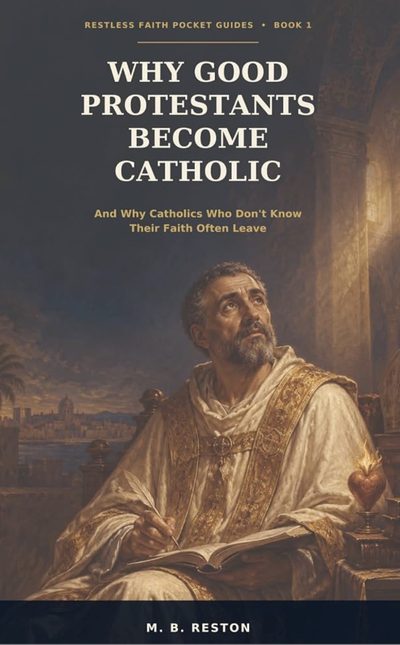
Pocket Guide · Book 1
Why Good Protestants Become Catholic
And Why Catholics Who Don't Know Their Faith Often Leave
Who it's for: For anyone wrestling with sola scriptura, the papacy, Mary, or the Eucharist — and wondering why serious Protestants keep following Scripture and history into the Catholic Church.
View on Amazon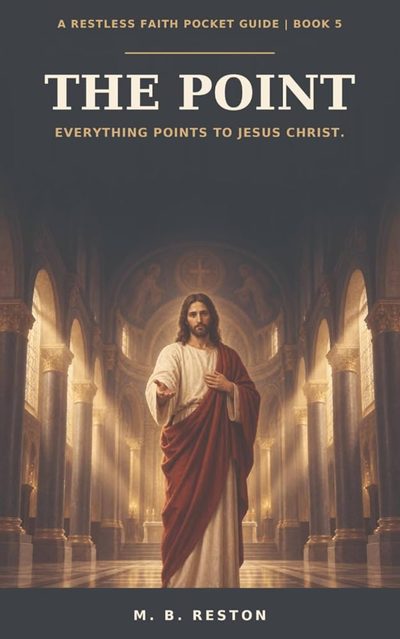
Pocket Guide · Book 5
The Point
Everything Points to Jesus Christ
Who it's for: Catholic life can look crowded — creeds, saints, devotions, rules. This asks one question of all of it: where is Jesus here? For anyone who wants Christ at the center, not buried under the rest.
View on Amazon