A Catholic answer
Why do Protestants become Catholic?
The short answer
Most Protestants who become Catholic don't do it because they stopped loving Jesus or the Bible. Usually it's the opposite: taking Scripture seriously raises questions about who decided which books belong in the Bible, what the first Christians believed about the Eucharist, and where authority lies when sincere Christians disagree. Many find that the answers lead to the Catholic Church.
Following Scripture, not leaving it
Converts often say they came because of the Bible. Scripture itself calls the Church "the pillar and ground of the truth" 1 Timothy 3:15 and tells believers to hold fast to the traditions they were taught, whether by word of mouth or by letter 2 Thessalonians 2:15. That raises a question: if the Bible is the only authority, where does the Bible say so?
Then there is the list of books itself. The Bible does not come with a table of contents. The Catechism explains that it was by the apostolic Tradition that the Church discerned which writings belong in the list of sacred books, the canon of Scripture Catechism 120. For many converts, trusting the Bible's contents but not the Church that recognized them stops making sense.
The question of authority
Sincere, Bible-believing Christians disagree about baptism, Communion, divorce, how salvation can be lost, and much more. Jesus prayed that his followers would be one, so that the world would believe John 17:20–23. Converts often conclude that he would not leave his Church without a way to settle those disagreements. Catholics believe he gave one: the apostles and their successors, with Peter at their head Matthew 16:18–19 Catechism 85. That teaching office is not above God's word; it serves it Catechism 86. See why Peter is called the first pope.
Reading the early Church
Many converts start reading the Christians who lived just after the apostles: Ignatius of Antioch, Justin Martyr, Irenaeus. They find bishops, a Church that called itself catholic, and belief in the real presence of Jesus in the Eucharist, centuries before the Reformation. The Anglican-turned-Catholic John Henry Newman summed up his own journey this way: "To be deep in history is to cease to be a Protestant" (An Essay on the Development of Christian Doctrine, 1845).
What stays the same
Becoming Catholic does not mean throwing away faith in Jesus. The Church recognizes baptized Protestants as brothers and sisters in the Lord Catechism 818, and teaches that much that is good and true exists in their communities: the written word of God, the life of grace, faith, hope and charity Catechism 819. The Church recognizes their baptism, and it is never repeated Catechism 1271 Catechism 1272. Converts often describe it as bringing everything they loved home, and finding more.
If you're asking this for yourself
You don't have to have every answer worked out. Talk to a local parish about OCIA, read the early Christians for yourself, and bring your hardest questions. Here is what the process of becoming Catholic looks like.
Still have a question?
Ask Restless anything about this. You'll get a clear answer with the Scripture and Catechism sources to check it.
Ask your own questionRelated questions
Sources
Scripture links open the New American Bible at the U.S. bishops' site. Catechism links open the paragraph in the USCCB's online Catechism.
Go deeper
Short books from Restless Faith Media on this question.
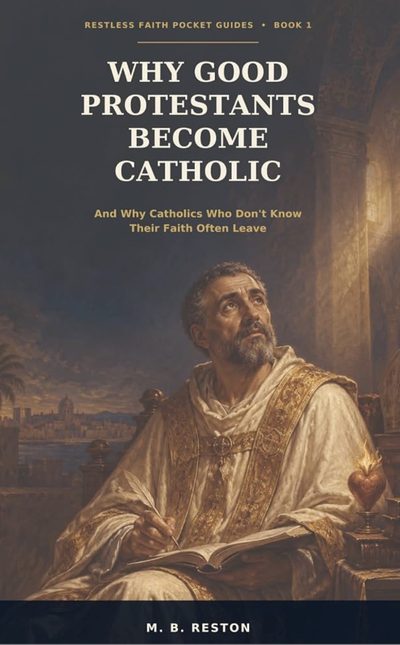
Pocket Guide · Book 1
Why Good Protestants Become Catholic
And Why Catholics Who Don't Know Their Faith Often Leave
Who it's for: For anyone wrestling with sola scriptura, the papacy, Mary, or the Eucharist — and wondering why serious Protestants keep following Scripture and history into the Catholic Church.
View on Amazon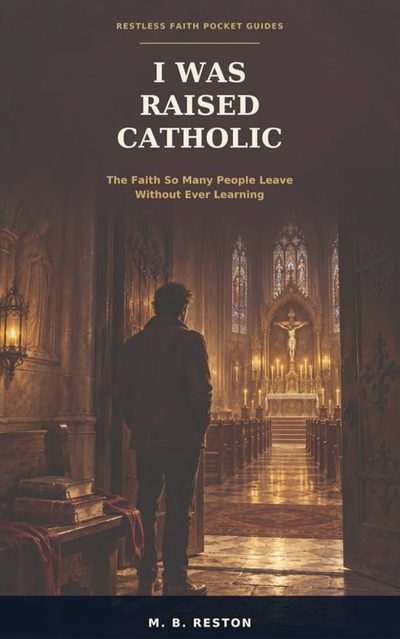
Pocket Guide · Book 3
I Was Raised Catholic
The Faith So Many People Leave Without Ever Learning
Who it's for: For cradle Catholics who drifted, never really understood it, or are quietly wondering whether to come back — seven familiar claims tested against what the Church actually teaches.
View on Amazon