A Catholic answer
Why do Catholics pray to saints?
The short answer
Catholics don't worship saints. To "pray to" a saint means to ask that saint to pray for us, the same thing Christians do when they ask a friend or a pastor to pray for them. Because Christ has conquered death, the saints in heaven are alive in him and still part of his one Body, so they can still pray for us Catechism 956.
Asking, not worshiping
Worship, the adoration that acknowledges someone as God, belongs to God alone Catechism 2096. Catholics give the saints honor, the way you might honor a hero of the faith, but never worship. The old English word "pray" simply meant "ask" (as in "pray, tell me"), and that is what Catholics are doing: asking.
Asking for prayers does not compete with Jesus. Scripture says there is one mediator between God and men, Christ Jesus 1 Timothy 2:5, and just a few verses earlier it urges Christians to pray and intercede for everyone 1 Timothy 2:1. Christians have always asked one another for prayer. Asking a saint is the same request made to a brother or sister who is now closer to God.
The saints are alive in Christ
Jesus told the Sadducees that God "is not the God of the dead, but of the living" Mark 12:26–27. Those who die in Christ are not cut off from his Body. Saint Paul says nothing, not even death, can separate us from the love of God in Christ Romans 8:38–39. The Church calls this bond the communion of saints: the faithful on earth, those being purified, and the saints in heaven are one family Catechism 946 Catechism 957.
Hebrews pictures the faithful who have gone before us as a great cloud of witnesses surrounding us as we run our race Hebrews 12:1.
Scripture shows the saints in heaven praying
In the Book of Revelation, the elders before the throne of God hold golden bowls of incense, "which are the prayers of saints" Revelation 5:8, and an angel offers incense with the prayers of the saints before God Revelation 8:3–4. James says the prayer of a righteous person is powerful James 5:16. If that is true on earth, it is not less true of those who now see God face to face.
Isn't that talking to the dead?
The Bible forbids consulting the dead through mediums and spells Deuteronomy 18:10–11, and so does the Church Catechism 2116. That is about trying to get hidden knowledge or power. Asking a saint to pray for you is the opposite: no séance, no secret information, just a request that goes, through them, to God.
How to start
Pick one saint: the one you were named after, the patron of your work or your parish, or someone whose story moves you. Read a little about their life, then simply say, "Saint ____, pray for me." The second half of the Hail Mary does the same thing with Jesus' mother: "Holy Mary, Mother of God, pray for us sinners" Catechism 2677.
Still have a question?
Ask Restless anything about this. You'll get a clear answer with the Scripture and Catechism sources to check it.
Ask your own questionRelated questions
Sources
Scripture links open the New American Bible at the U.S. bishops' site. Catechism links open the paragraph in the USCCB's online Catechism.
Scripture
Go deeper
Short books from Restless Faith Media on this question.
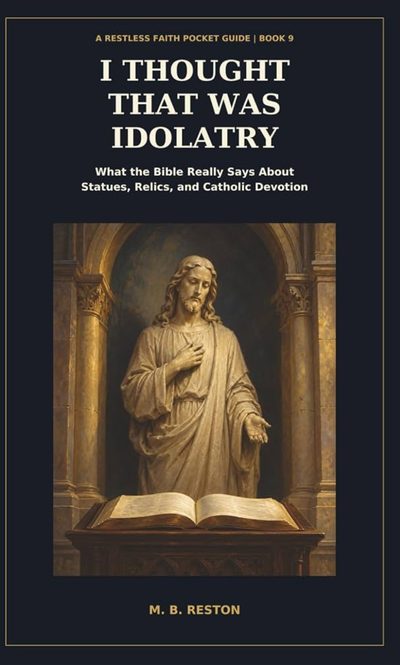
Pocket Guide · Book 9
I Thought That Was Idolatry
What the Bible Really Says About Statues, Relics, and Catholic Devotion
Who it's for: For anyone who looks at statues, relics, and candles and wonders whether Catholics broke the commandment — read with the Bible open.
View on Amazon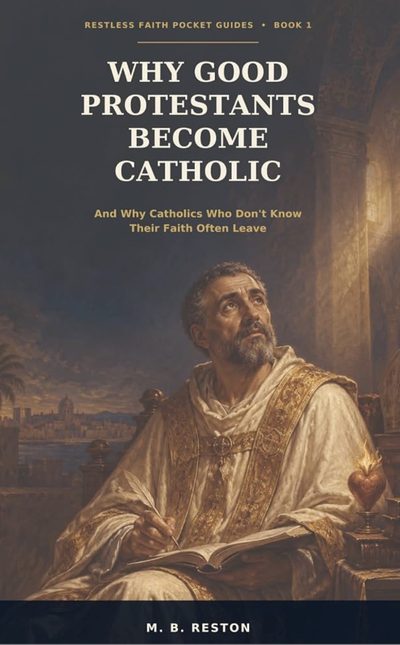
Pocket Guide · Book 1
Why Good Protestants Become Catholic
And Why Catholics Who Don't Know Their Faith Often Leave
Who it's for: For anyone wrestling with sola scriptura, the papacy, Mary, or the Eucharist — and wondering why serious Protestants keep following Scripture and history into the Catholic Church.
View on Amazon